Rinpoche can be partial when making room for a poet he loves. For Tsangyang Gyatso, he uses “only”: “The only poet till now”. At that moment, it is as though there is just one chair reserved for poetry.
Those words belong to 2014. When Tagore comes before him, delight finds another sound: “Ahhhhhh Tagore”. The Ah is drawn out, as though he has exhaled before saying anything about the poem.
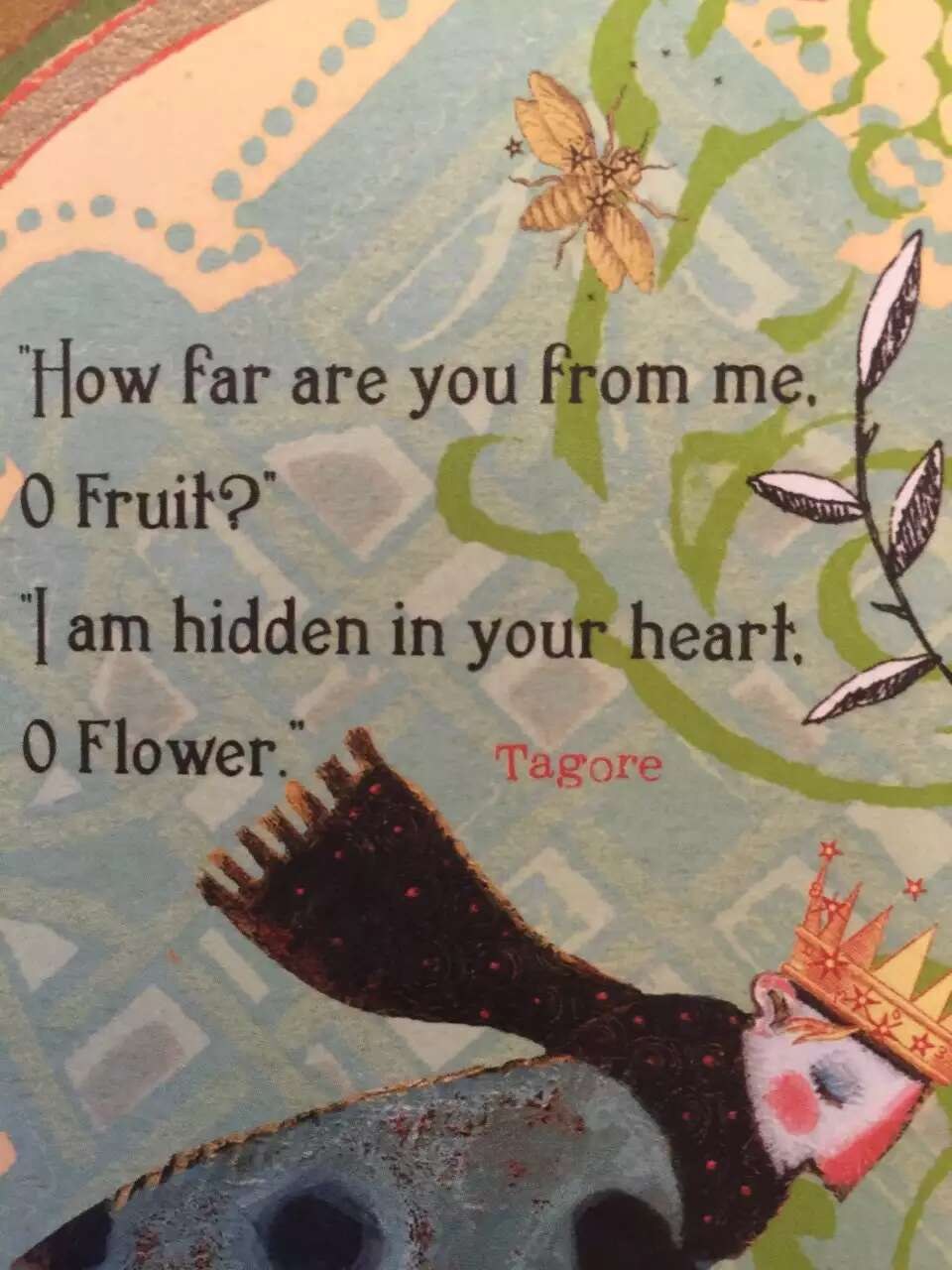
A flower asks the fruit how far away it is. The fruit replies that it is hidden in the flower’s heart. The lines are printed on patterned paper: a simple question, and an answer close at hand.
The flower and the fruit.
There is already an only poet; still, there is room for Tagore. When affection arrives, that single chair proves less exclusive than it sounded.
The Price of a Flower
Tagore has another flower for him. In the longer poem he chooses in May 2016, a cold night has destroyed the lotuses in a pond, all but one. A flower seller picks the survivor and takes it to the palace gate.
A man offers a grain of gold for it. The king offers ten; the man offers twenty. Both want the flower as an offering to the Buddha, and the price keeps rising. There is still only one flower; the desire to purchase it grows larger.
The seller makes a calculation of his own. If both buyers want it for the same person, surely that person will pay more. He withdraws the flower from sale and carries it there himself.
But when he sees the Buddha, the transaction falls away. He lays the flower at the Buddha’s feet. Instead of the gold he had wanted, he asks for a grain of dust from those feet. Here the poem lets go of the price, and keeps the flower.
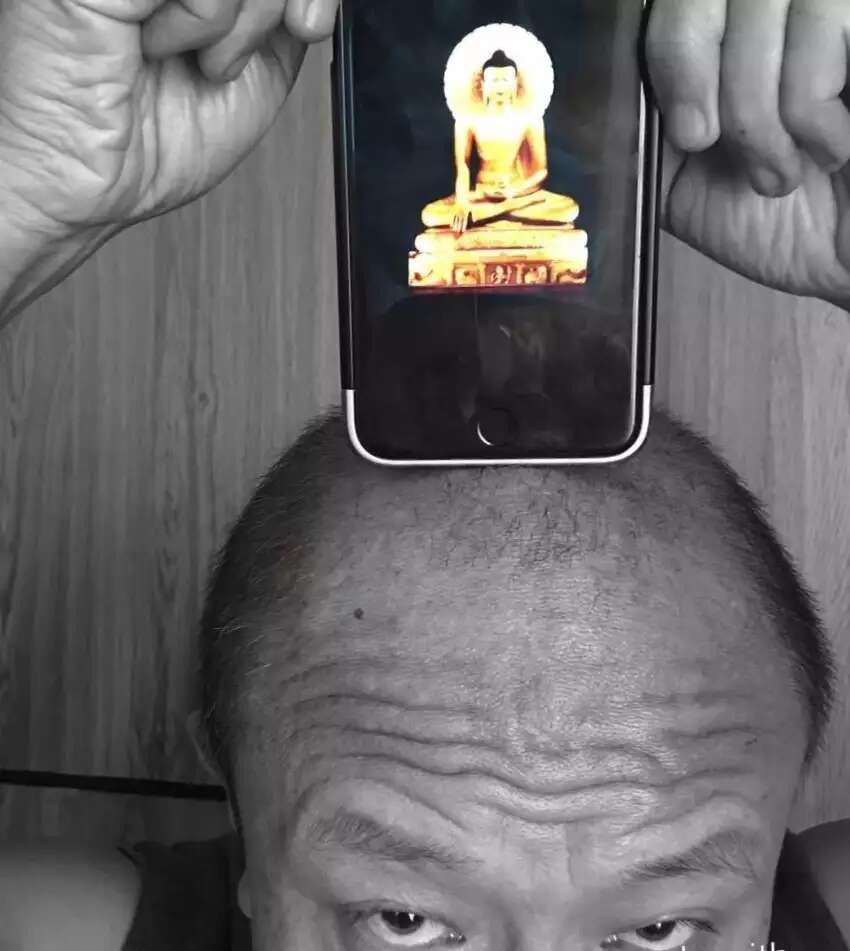
Rinpoche’s accompanying gesture is unusual too. He holds a phone displaying a Buddha image above his head, steadying it with both hands. The lines on his forehead are plain; the image glows on the screen. An object ordinarily used for receiving messages is held up as something sacred.
Above his head.
Tears in the Morning
A passage can move him to tears. One morning in June 2017, reading the Vimalakirti Sutra, his eyes fill. In telling people about it, he supplies a rather unflattering account of his own temperament.
A “grumpy cold hearted old man”: that is how he describes himself, making the tears all the more endearing.
There is, after all, a tiny bit of good left in this being, he says. Then he attributes even that to the Buddha, gently passing on the chance to take credit.
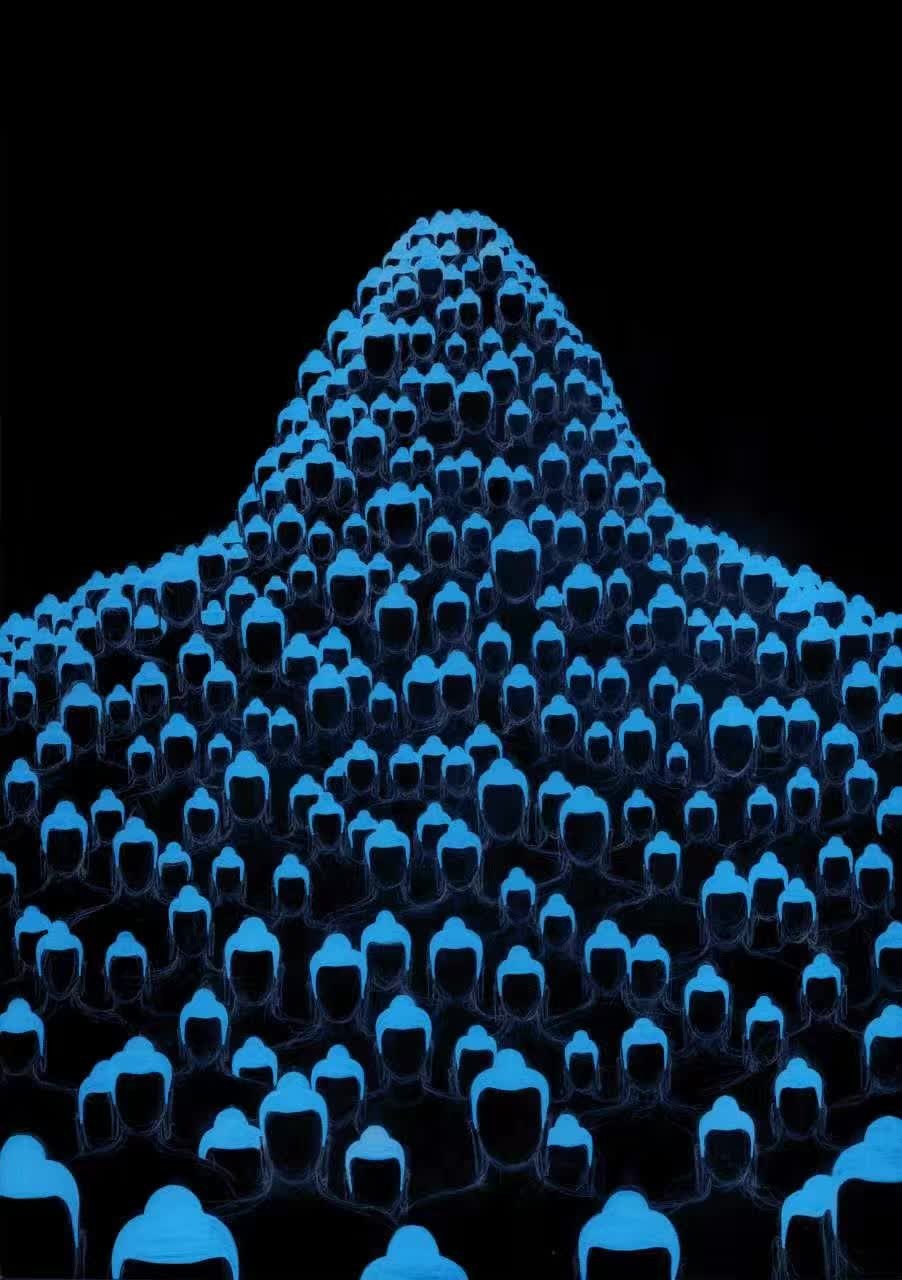
One figure, many figures.
On the same day, he offers others a link to a translation of the Vimalakirti Sutra, as an offering and in gratitude to everyone who has helped. Alongside his private emotion is a text he wants to make available to others.
The self-described cold-hearted old man has barely mentioned his tears before he is counting the small amount of goodness left in him. The emotion is real; it need not keep him from teasing himself.
No Need to Hurry
Other lines invite a pause before action. In September 2024, Rinpoche chooses Bashō’s lines about clouds giving the people watching the moon an occasional rest.
He goes on to think about life’s complications. Sometimes, he suggests, trying not to fix them is the solution. Yet it is difficult; we seem addicted to setting things right.
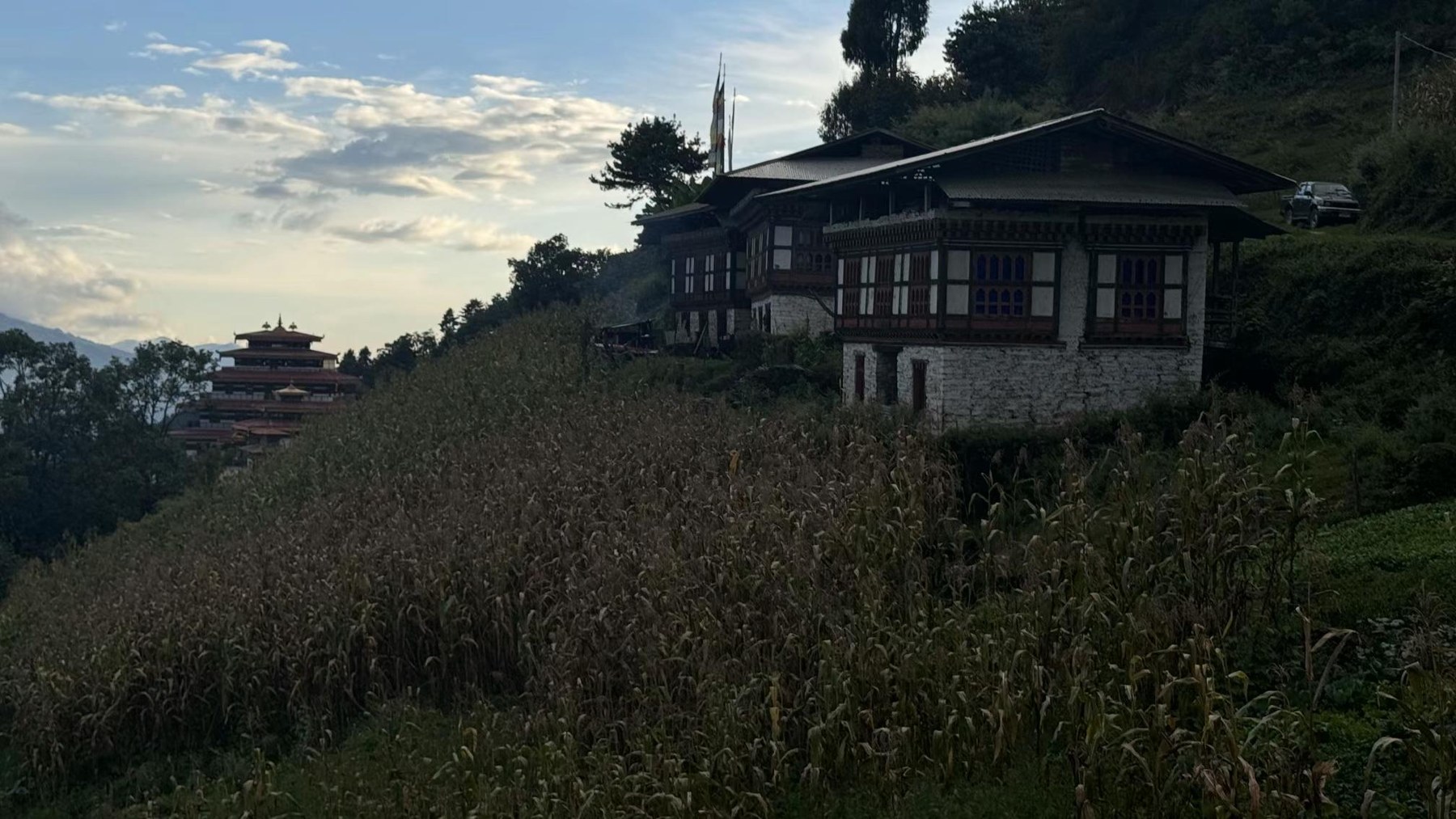
On the hillside, a house stands beside fields, its windows in a row. There are more roofs in the distance, tall crops nearer at hand. Clouds spread across the sky, and for this moment the daylight holds.
The person reading the poem may rest as well. Even the arrival of a cloud need not be given a task.