Night stops at the railing. The hammock is woven in colored threads, high at either end and low in the middle, holding a man and a pale shawl. Dark red cloth shows underneath. His eyes are closed, his head rests to one side, and his body has somewhere to settle.
True Colors is playing. The hammock scarcely moves.
Rinpoche has an affectionate name for Cyndi: “Cyndi my girl”.
This end of the hammock.
In Time After Time, someone lost can find company, someone falling will be caught. He knows this voice: “who else but miss cyndi”.
Whether it is “my girl” or “miss cyndi”, the affection is easy. She sings, he listens; across the song, his greeting has the warmth of one offered to an old friend.
A song can take shape in the hands as well. On a stage in Singapore, people dressed in black and white stand in a row, reaching forward, crossing their hands and raising them to True Colors. The people alongside do the same. The movements pass along the line.
“Singapore way”, Rinpoche calls it. The name fits.
In the hammock, the listener has even closed his eyes; on the stage, hands keep moving with the song. The same True Colors has room for both.
Hands join the song.
A Thousand Times First
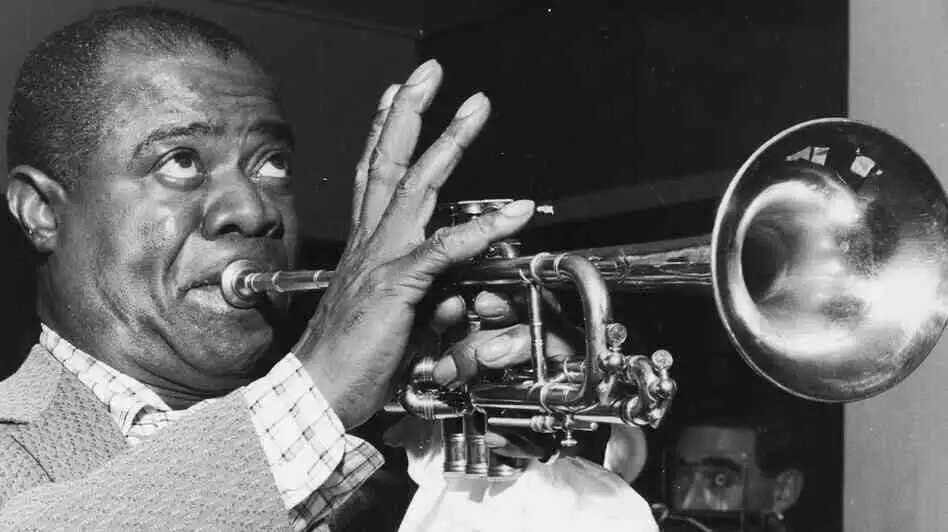
Armstrong receives a more solemn distinction: “One and only”. The old singer stands smiling at a microphone, his trumpet by his side, singing What a Wonderful World. Rinpoche will not quite put him in a row with anyone else.
His fondness for the singer has also produced an elaborate joke: Armstrong’s reincarnation, he announces, has been found.
He conducted the joke with some ceremony. First he ruled out nepotism. The child's family was poor, he added, so there was no suspicious agenda either. The enthronement would be announced later. Anyone wishing to attend could begin preparing now.
The preparation was to chant What a Wonderful World a thousand times.
The trumpet rests at the old singer’s lips, his eyes looking upward. A fondness for his music can earn the listener quite an assignment. A thousand times is no small number.
The Chairs Can Wait
In Mexico, music comes right up to the dinner table, almost within reach. A musician wears a white jacket and a large bow at his throat, his fingers busy on the strings. Another instrument has a great rounded belly; held against its player, it almost hides his upper body.
The singer beside them wore dark clothes. The windows were behind him, the tables and chairs close in front. A place for these musicians did not need to be as large as a stage.
Rinpoche wanted more: “Never enough”.
Beside the table.
Musicians pass beside the restaurant tables. Diners turn toward them, smiling. Mexico earns five exclamation marks from him, and the music leaves him wanting more. Beside such tables, the ears have their share of work.
He is in no hurry for any of this to end.
Music beside a table can also draw people out of their chairs. After dinner in a Pune living room, someone lifts both hands; someone turns. A denim jacket and long skirts move through the middle of the room. People sitting to one side clap. Bare feet step on the floor.
The table was still at the back. The chairs were there too. The people had moved into the open space.
After dinner, another dance.
The woven hammock could hold a listener quietly through a whole song. Amid the liveliness of this room, perfectly good chairs cannot keep so many people seated.
The song is still going. There is time for a little more dancing.