Rinpoche supports his forehead with one hand. The other is still busy in his plate. The plate is green. A large plastic water bottle stands at the edge of the table, with a green carrying ring at its neck. Blue circles cover the tiles behind him, one beside another.
He wears a yellow sleeveless top, with a red mark on his forehead. He looks up for a moment, lowers his head, and brings another mouthful to his lips. The hand that supported his forehead lifts a little and stays beside his head.
An inexpensive meal, and a very satisfying one.
The price is modest. The praise is anything but: “wahhhhh”, “sooooo goooooood”. The letters crowd together, as though the good taste has not quite passed and the word is reluctant to end.
Inexpensive, and delicious.
All that praise for an inexpensive meal, and none of it seems excessive.
First, the mouthful in his hand.
This Bite
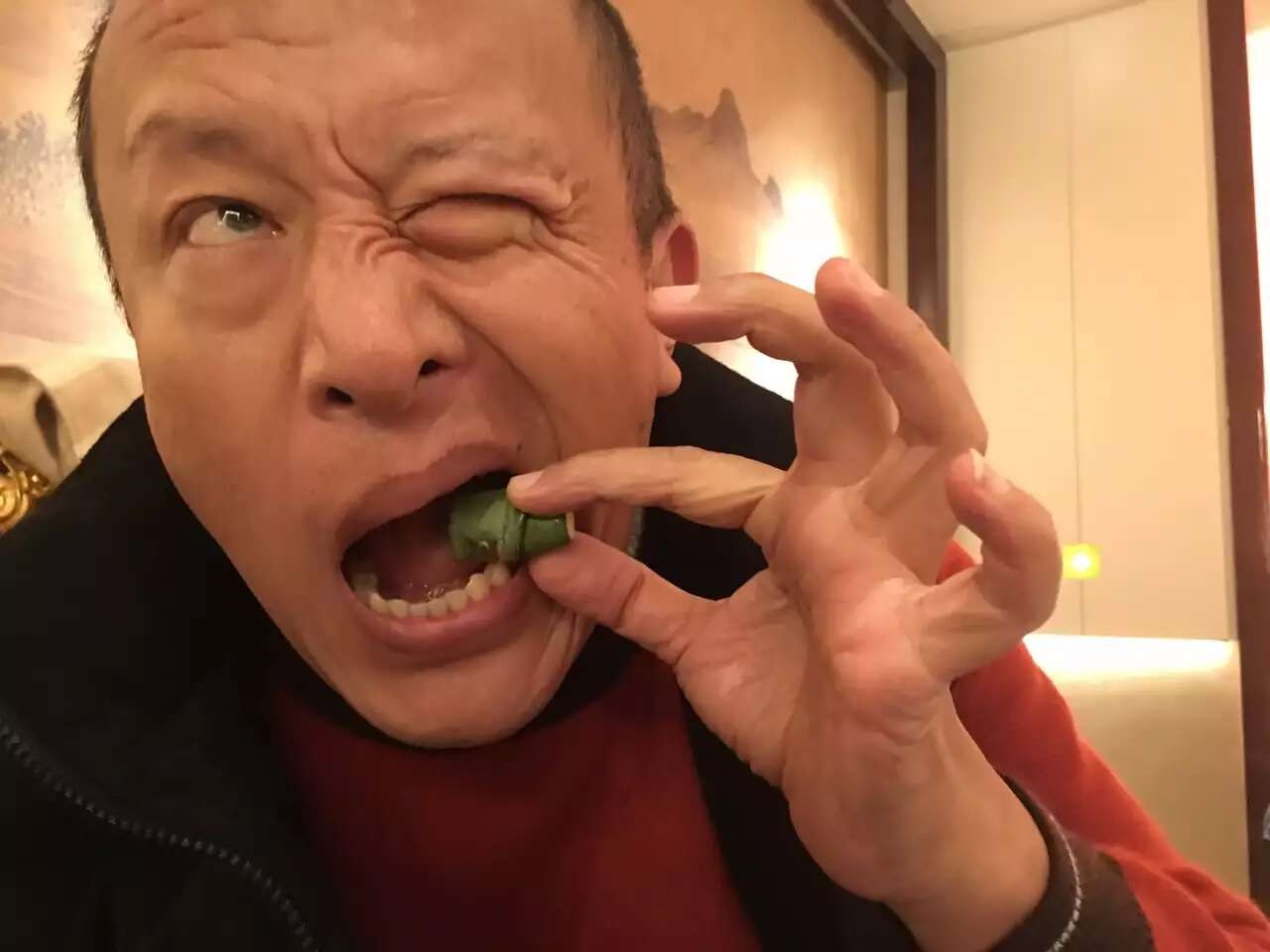
A particular favorite calls for some help from the face. Holding a small green parcel, Rinpoche opens his mouth, squeezes one eye shut and looks upward with the other. The parcel has not gone in yet. His face is already well prepared.
Betel. He gives it a large distinction: “the best food in whole wide world”.
He is pleased with its pedigree, too: five-thousand-year-old food, now we are talking. The age he gives it is considerable. In the hand, it is still only a bite-sized parcel of green leaves.
Not even a crumpled wrapper can dim that affection. The gold paper carries the name Qingguo Zhuangyuan; the betel has been unwrapped. He says “Unique”, then adds “Must eat”. His opinion is quite clear.
Praise for an inexpensive meal can stretch on and on. This “Must eat” is brief, almost a beckoning hand.
Everyone's Meal
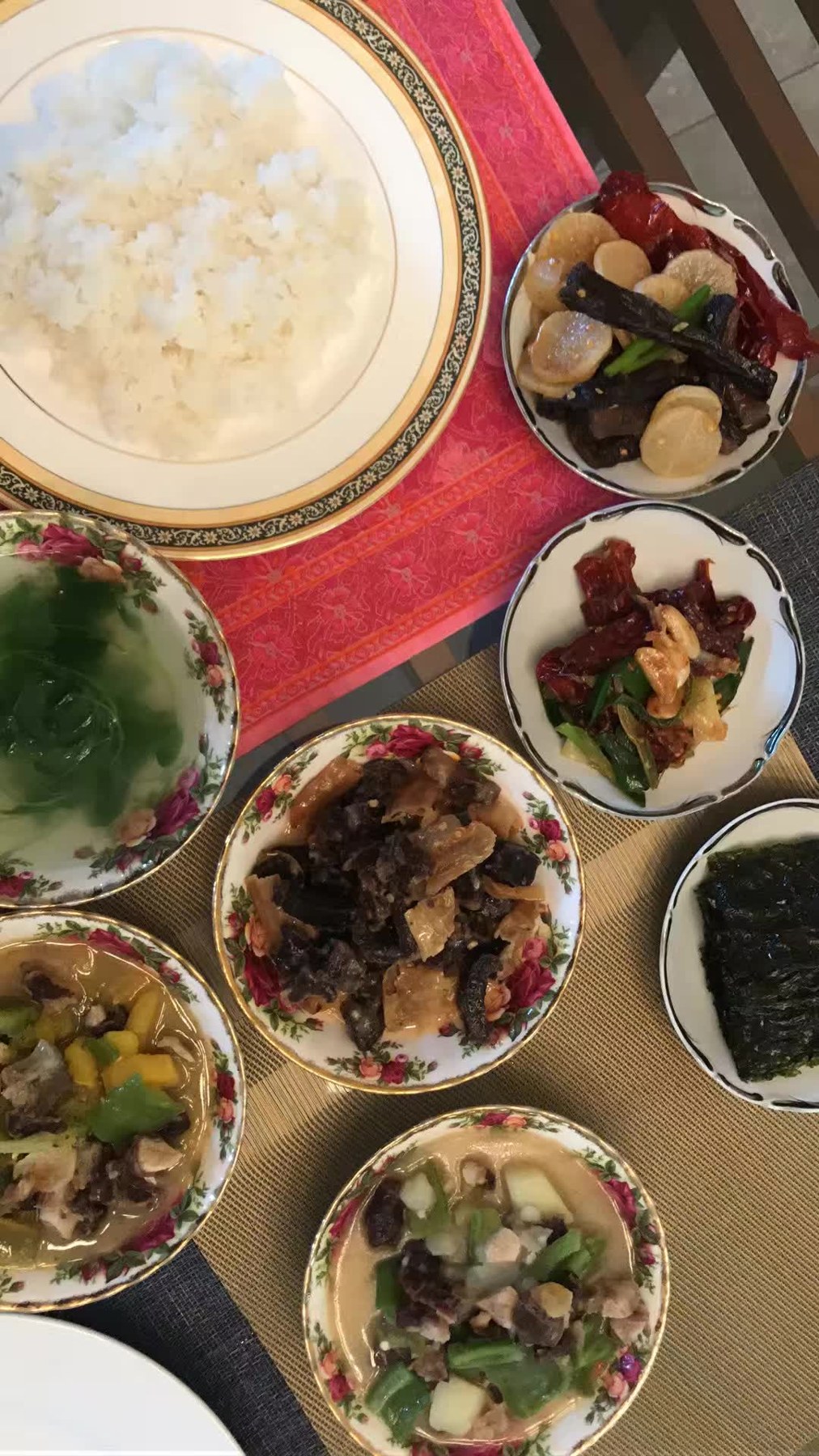
In Los Angeles, there is Bhutanese food on the table just the same. White rice sits on a large bordered plate. The flowers on the smaller bowls are red. Green chilies lie in a pale sauce; the dishes alongside are full, bowl close to bowl.
“Good old Bhutanese food”. With a greeting as fond as that, a meal far away in Los Angeles has something of a reunion about it.
The table is full of familiar food.
Bhutanese food in Los Angeles.
He enjoys his own meal, and takes an interest in other diners. In a shed with gray walls, a buffalo lowers its head toward a bucket on the floor. A donkey stands nearby, its long ears raised. Light comes through the doorway and reaches the ground beside them.
Perhaps they are waiting for food, he guesses.
Both animals are tethered, the bucket near their feet. He does not settle what they are waiting for. Food is his first suggestion.
Perhaps waiting for food.
And then there are the small helpers he remembers when he speaks of food. A bee on a flower is covered with yellow pollen, right up to its face; its eye has a blue-violet sheen. To the bees, he sends a wish for long life.
May they all live long. Without them, he says, there will be no food for us.
The thanks have the warmth of a greeting to acquaintances who have lent a hand.
For a good mouthful, he can draw out his praise; when he speaks of those who help put food on the table, his thanks reach as far as a flower.