Not flustered at all。仁波切说它一点也不慌。猫走猫的路,院子里其余的排场,仍归人照管。
它不慌。
Two Faces
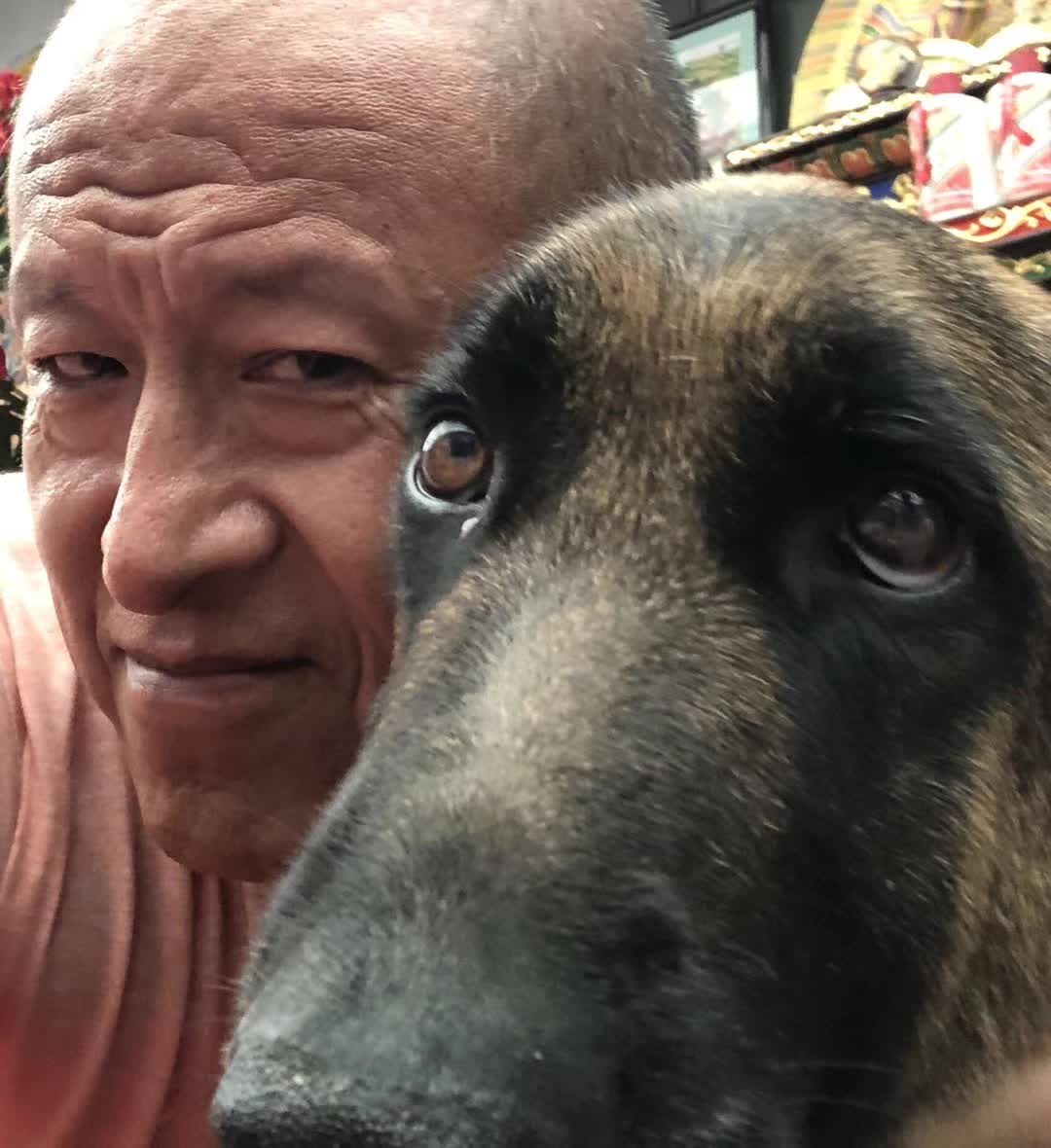
The dog’s nose arrives first: a large dark shape close to the lens. Above it are the eyes; beside it Rinpoche’s face has squeezed into view. They have a side each, though the dog has rather more room.
Ni Ni and me. In the name he gives their portrait, the dog comes first and he follows.
The dog looks this way, and so does he. Their faces are very close, each with its own expression. Neither has arranged to look quite like the other.
New Members
For a new arrival, the wording becomes more formal. In November 2015 a little calf is welcomed as a new member of Khyentse Labrang. The larger buffalo stands nearby while a person in yellow crouches with a hand beside the calf’s head.
Welcoming new member of Khyentse Labrang. The new member is small, but the welcome already gives it a place to belong.
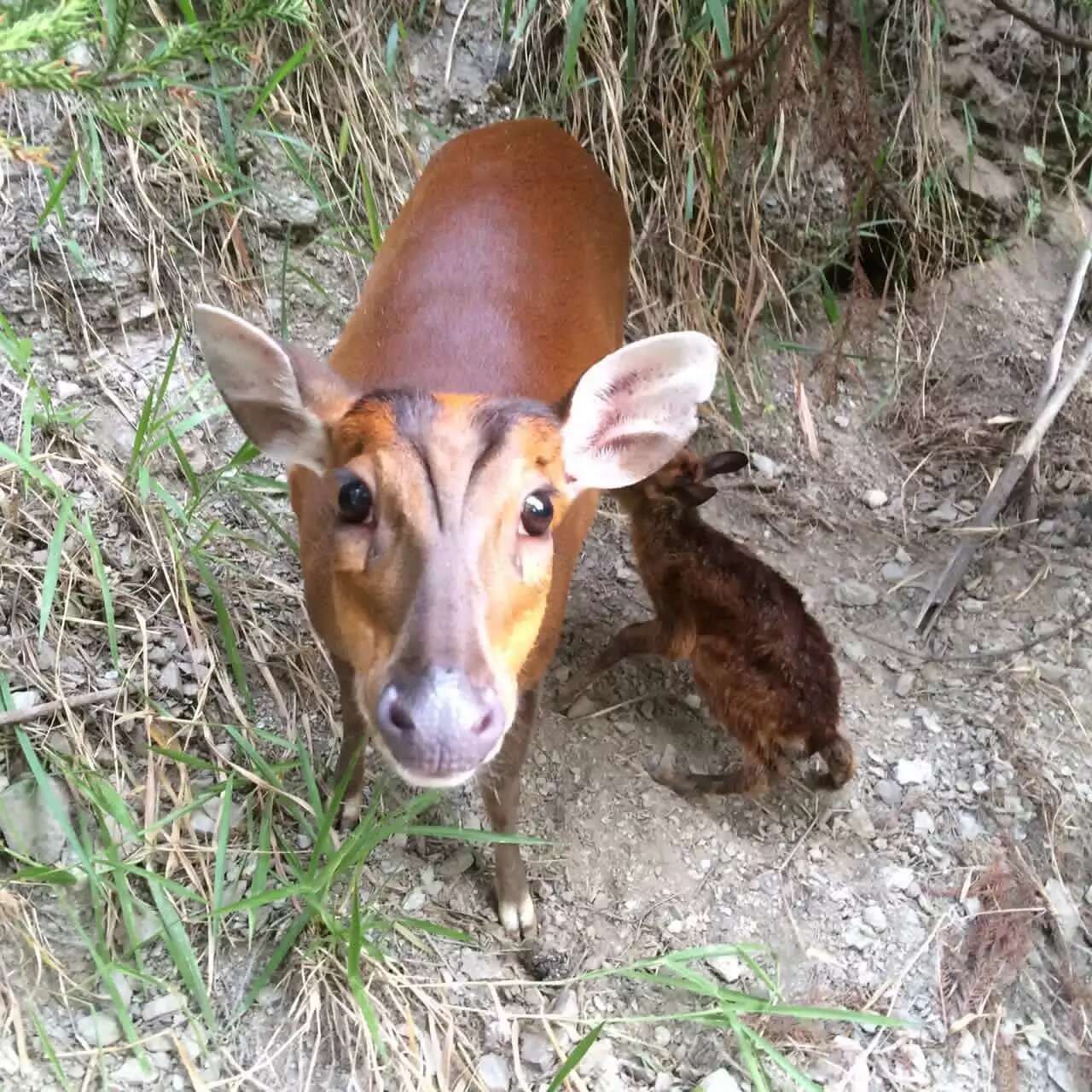
Dewathang monastery has a new member too. Beneath the branches, a small deer is close to a larger one. There is earth, stone and fallen greenery under them; spots are visible on the little one’s coat.
The word Rinpoche uses to welcome it is again member. Within that word, a place has been made for it.
A new member.
The larger deer looks up, the smaller one close beside it. Branches screen part of the surroundings. This little patch within them looks quiet.
What Became of the Donkey?
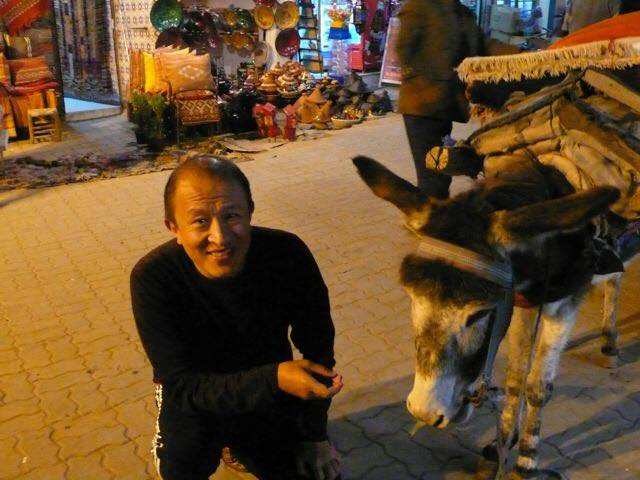
Remembering an animal need not take many words. Rinpoche crouches beside a donkey, smiling towards the camera. The donkey holds its head lower, with bundles still on its back. Shop lights glow behind them.
In May 2019 he wonders: I wonder what happened to this donkey.
Still remembered.
He wants to know how it has fared since. The donkey with its lowered head in the photograph is still on his mind.
A Day of Its Own
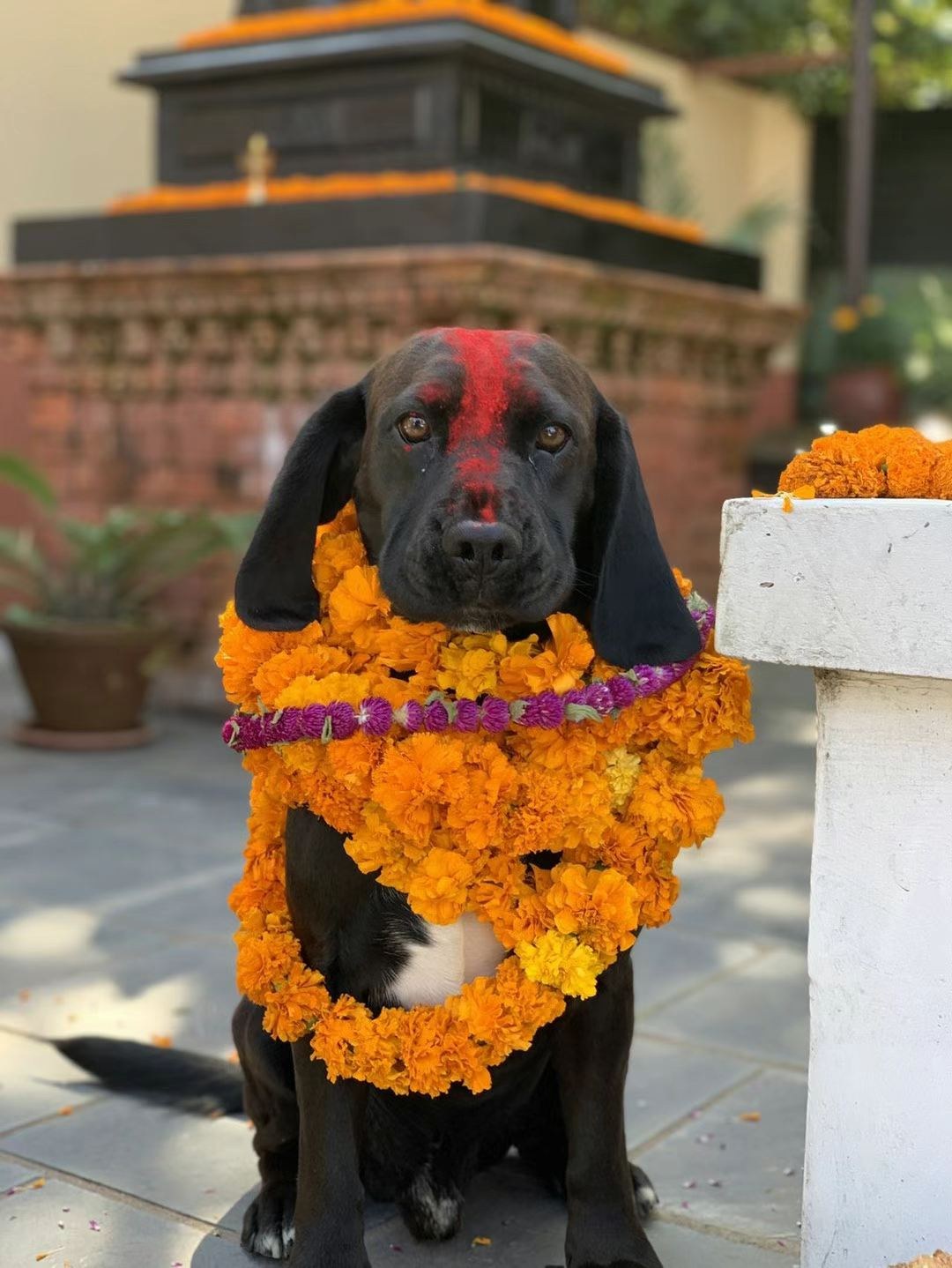
When a busy festival comes round, he does not want the dog forgotten. In October 2022, mentioning Diwali, Rinpoche makes a point of reminding people that this equally important day is Dog day.
The black dog wears orange-yellow flowers across its chest and a red mark on its forehead. It sits upright with its mouth closed. People have prepared all these colours for it; it simply keeps its own dog’s face.
A person bends down, reaching towards the things set before it. The dog, with its ordinary need for care, sits at the centre of the attention.
Its day too.
A cat has its own way of proceeding. People stand with long garments falling towards their feet, while a grey-striped cat walks through the courtyard. Low among their hems and feet, it has a passage of its own.
Not flustered at all, Rinpoche says. The cat goes its own way. The rest of the courtyard’s arrangements remain for the people to attend to.