At night, the signs announce themselves before the people below can be distinguished. TOKYU HANDS shines vertically on a building; more lights run down the street. The street cannot show everything the shop contains, but Rinpoche has already awarded it a place.
First in the world.
He has not finished. Second place goes to Manufactum in Berlin. In January 2015, his small ranking stretches from Japan all the way to Germany.
In praising a shop, he is willing to bring the whole world into the comparison. Merely calling it good would hardly contain that moment’s enthusiasm.
The sign of the first-place shop.
A Well-Dressed Hot Dog
Something much smaller can catch his eye for its looks: a hot dog. A brown roll holds the sausage, pale yellow sauce winding across the top, with a sheet of white paper beneath it. There is not much here, but each thing has its place.
“In Japan even hot dogs are stylish”. There is affection in that “even”, as if he has paused to straighten the hot dog’s collar.
Even the hot dog has style.
His attention reaches a building site as well. Blue tarpaulins lie across the ground; cones and rails mark off the work, with vehicles inside. Someone passes along the street. The site goes about its business beside everyday life.
This time his comment is brief: “This is Japanese construction site.” The cones stand beside the road, and a pedestrian passes along the edge.
A building site beside the street.
Too Many Things
Small things can make quite a gathering. On a brightly patterned cloth, pens stand beside a cup, boxes beside the pens. Papers are spread open; packets overlap. No sooner has the eye settled on one thing than another offers itself nearby.
Rinpoche’s words for this assembly are “Suffering of having too many things”.
When delighting in things, he can decide quite clearly which shop is first and which is second in the world. When there are too many things, there is this trouble as well. Delight in things and exasperation at their number can be close neighbours.
A cup, a pen, a box: each takes up so little room alone. Together on a table, they begin to make demands. Nothing is especially large, and yet every space seems spoken for.
Someone Inside
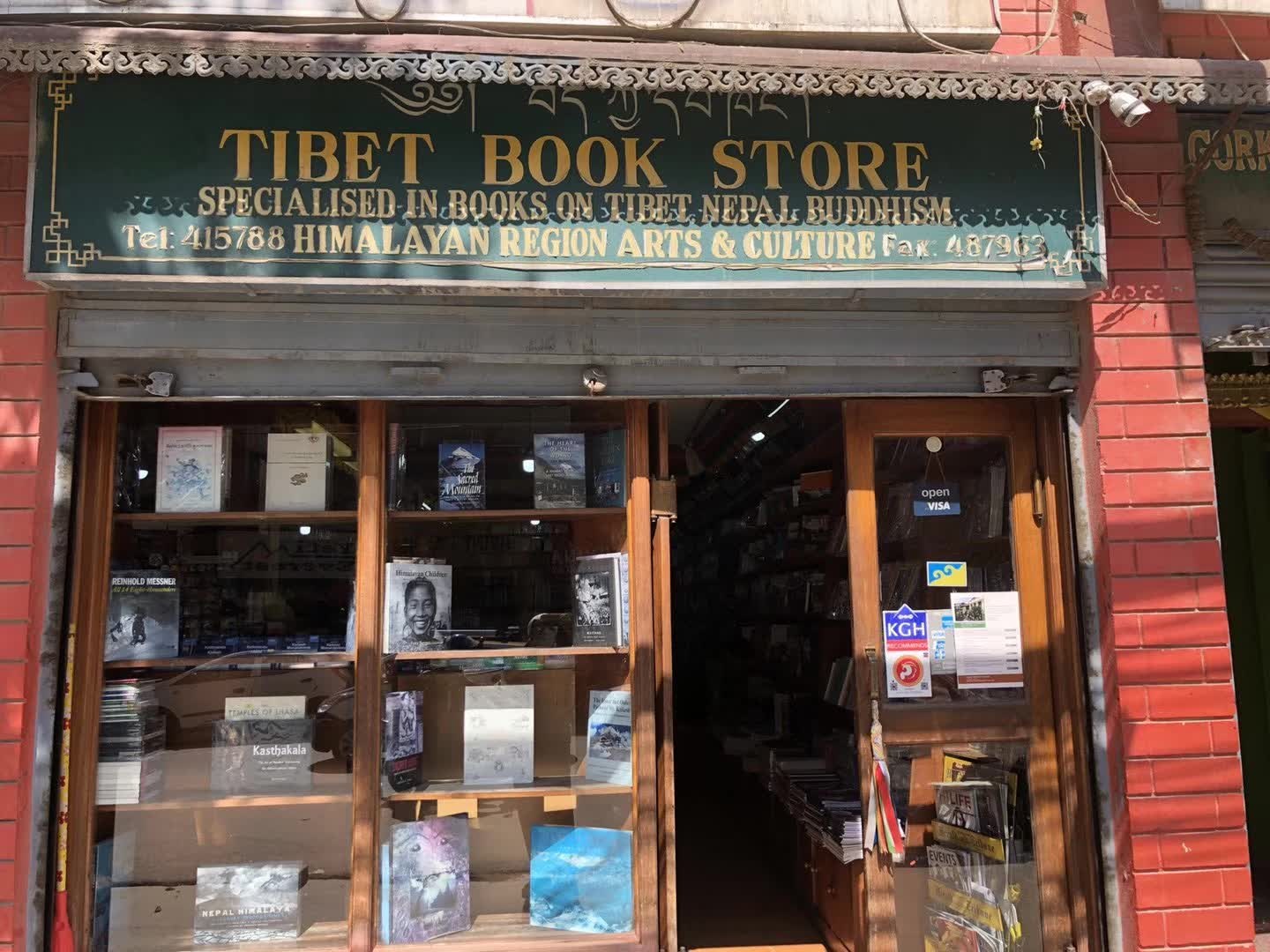
Another shop wins him over for a reason that needs no ranking. In Nepal, a green bookshop sign hangs above red brick, the windows crowded with books. The door stands open. Inside, the light is dimmer than outside.
In October 2018, he recommends a visit. What makes the shop worth entering, he says, is the feeling that it is run by a human being rather than a machine.
He lists no opening hours, mentions no discount. The essential word in his recommendation is “human”.
Behind the glass, one book stands beside another, different in colour and size. There are books by the doorway, and more within. Choosing would take a pause in one’s walk.
The praise this shop receives is just its size: worth going in.