A child, barely ten, hears that she has arrived, drops what he is doing and rushes with the others to the window for a glimpse. This is how Rinpoche later remembers himself in a letter. After so many years, that rush to the window remains.
In May 2020, he writes a birthday letter to an elder of a royal family. He begins with more than half a century of life and the extraordinary people who have affected it. In addressing her, memory returns first to the position of a child.
The qualities he remembers include fine details: the choice of clothes, the combination of colours, the way she treats the people around her, the care given to everything from dining tables to altars. In expressing respect, he does not pass over these everyday matters.
There is also her storytelling voice. He describes it as gentle and quiet, and wishes those stories could be recorded for others to hear in the future. Even the sound of a person’s goodness seems worth keeping.
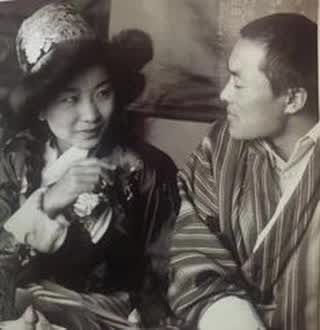
An older photograph.
He recalls her veneration for her guru and the help that enabled people of his generation to receive precious teachings. As the letter deepens, its gratitude continues to arise from particular acts of care.
At the birthday wish, his tone acquires a gently non-negotiable quality: she has no choice but to live for many more years. The reason is that the world needs her.
The child who hurried to the window for a glimpse has grown older and still wants her to stay.
His Names for People
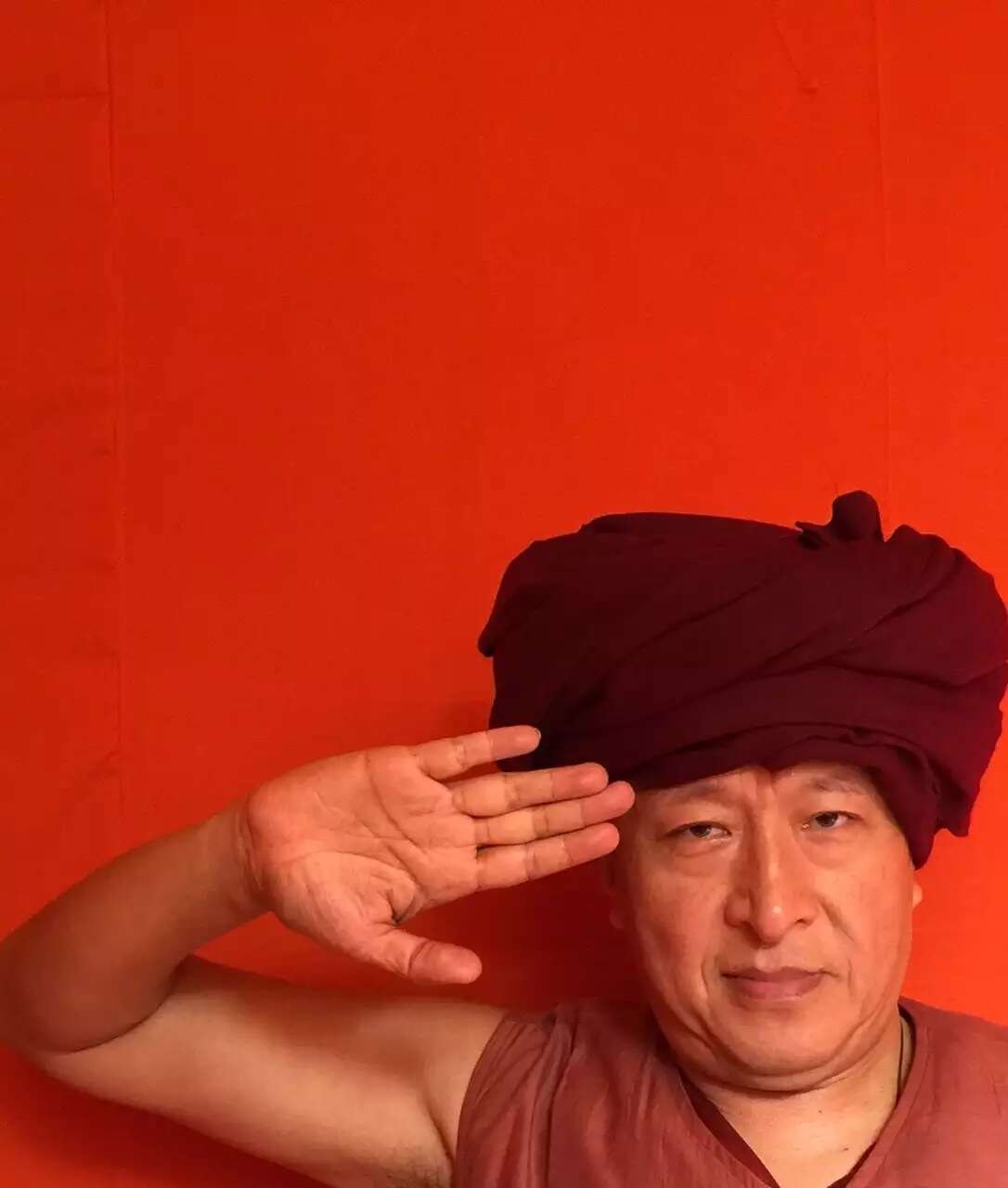
Sometimes, in expressing respect, he tries on a small new rank. In one greeting, Rinpoche calls himself “private djkn”, saluting the general. He supplies the lower rank himself; the courtesy is no less complete for it.
In the photograph he does raise his hand, fingers beside his forehead, a large wrapping of dark red cloth on his head. The name invites a smile; the body completes the salute.
The private’s salute.
For another group of friends, he begins with what they eat and drink: chapati, jal jera and pann. In this affectionate roll call, food seems to arrive before names.
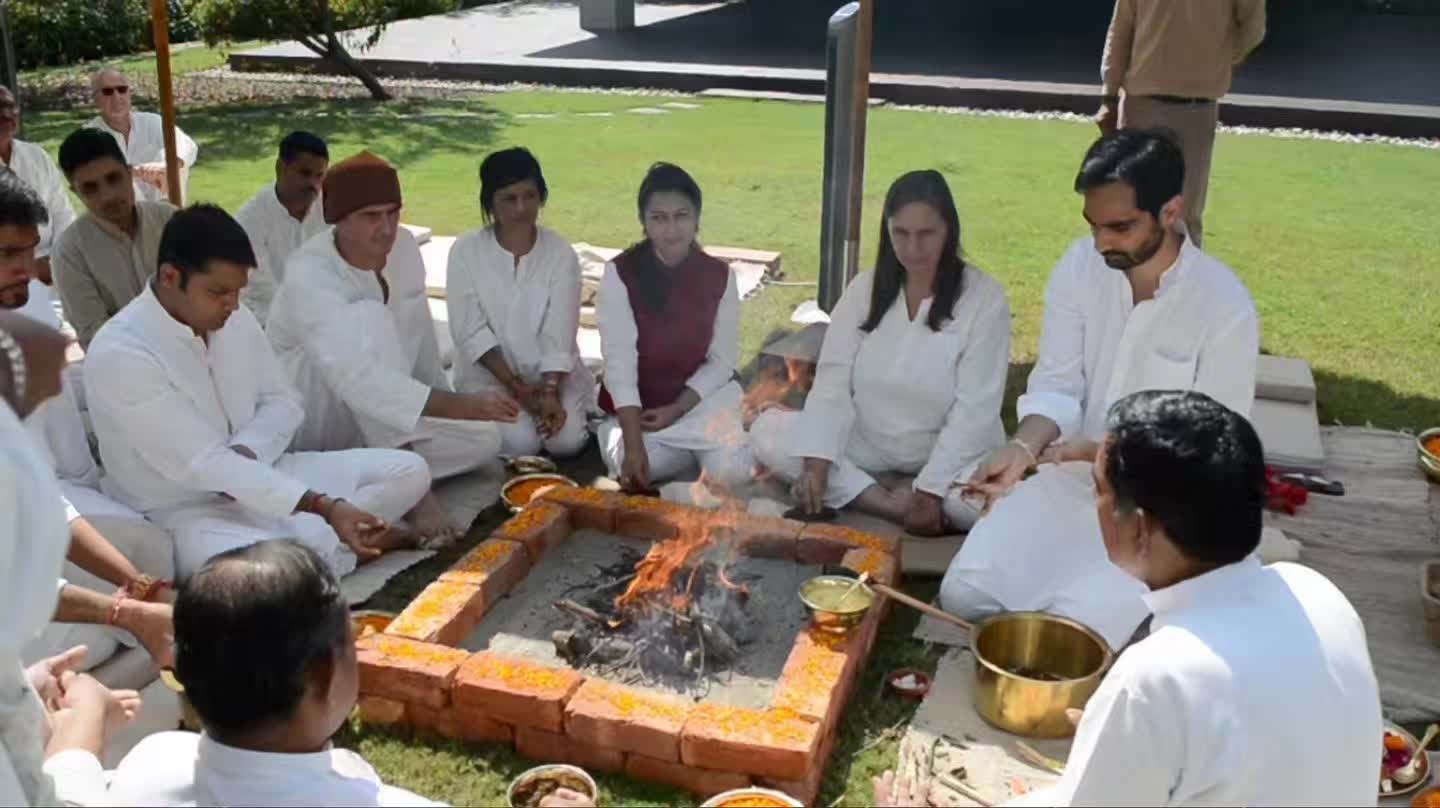
This time it is their act of remembrance that occupies him. He calls the person remembered “Grand chief”. A portrait stands on the lawn; people in white sit together, fire before them and trees behind. The respect is being made visible together.
Sitting together.
General, private, Grand chief: each form of address carries something of his tone. Familiarity has not displaced respect.
Turning to You Again
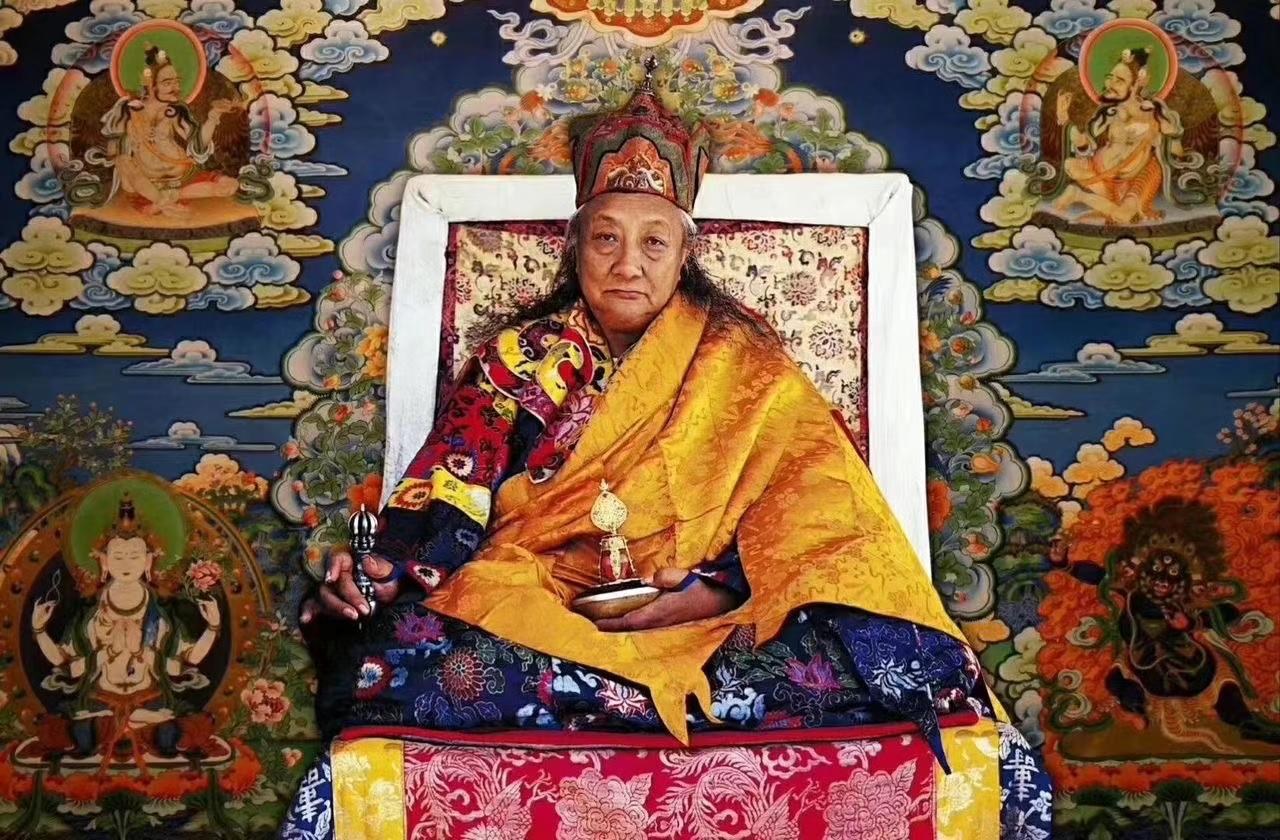
When he turns to Dilgo Khyentse Rinpoche, his words grow quieter. In January 2024, he writes that his need to call upon him has no end.
“My need to call upon you is endless.”
But he feels no shame, because that care is endless too. The awkwardness of always having to ask someone for help can be gently set down within such trust.
He does not present himself as someone who has outgrown the need for care. After all these years, he can still turn to you, still ask to be looked after.
Carried Along
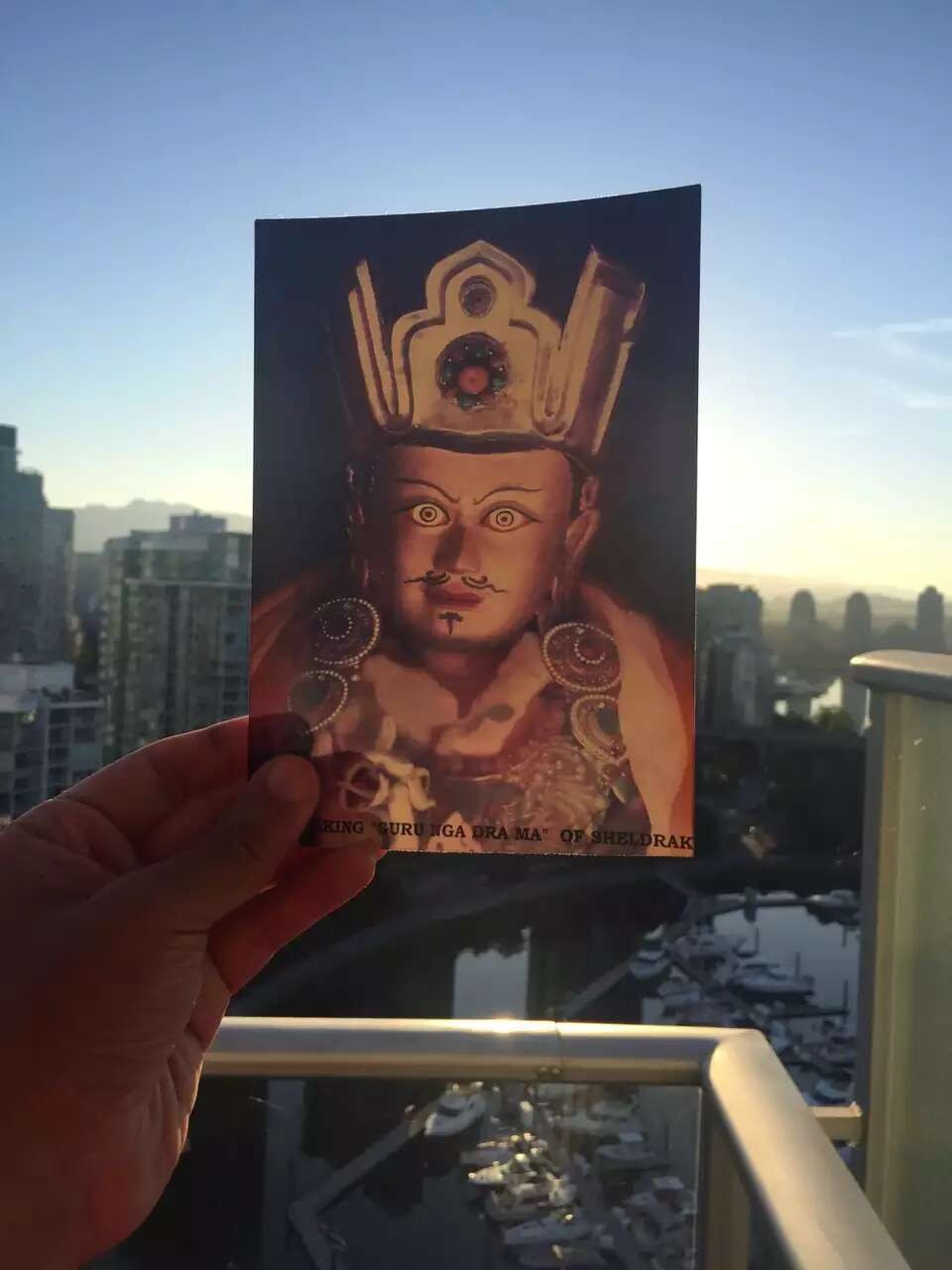
Sometimes the wish not to be parted takes a small form, small enough to hold in one hand. An image of Guru Padmasambhava is raised before a city skyline. Buildings in the distance, a railing nearby, the face in the image between them.
In June 2015, Rinpoche addresses the one represented there: whatever happens, wherever he wanders, however confused he becomes, may he never be apart from him.
The place may change; he may become confused. He leaves those possibilities in the prayer. With so much unsettled, the wish itself can still be certain.
The image is not large. Fingers support it, with a long distance stretching away behind.